
"tropical highland coffee"
1000 article(s) found

Introduction to the description of the Flavor of High-quality Coffee beans in the Coffee Variety producing area of Joy Manor, Nicaragua
Nicaragua is located in central Central America, bordered by the Pacific Ocean to the west and the Caribbean Sea to the east. The highlands in the north and the coastal plains in the east are part of the Central American volcanic belt. The eastern plain is high-temperature and rainy, with a tropical maritime climate. The suitable climate provides an excellent growth environment for the cultivation of coffee. High-quality Nicaraguan coffee, grown in the north and middle of the country. Coffee is Ni.

An introduction to the taste of coffee from Manor Santa Barara, Honduras with a hint of fruit.
In the 4th and 7th century, western Honduras was one of the centers of Mayan civilization. Columbus arrived in the Gulf Islands of Honduras in 1502, which was the beginning of Honduras's contact with Europe. Spanish troops began to conquer Honduras in 1524 and became a Spanish colony in the same year. In 1537-1539, Limpilla led 30,000 Indians in an uprising against Spanish colonial rule. 1539, Honduras

Delicious, rich, full-bodied Honduran specialty highland coffee
Honduras 'high-quality coffee uses water washing to treat coffee beans, usually after soaking, in the soaking time, defective fruit will surface, can be discarded first. The good fruit is then placed in a fruit peeler and peeled off by the rotating force of the machine. The peeled fruits are screened by machines to select excellent quality fruits. usually larger fruit

Coffee varieties and characteristics Coffee cherry varieties
Coffee beans and characteristics of coffee cherry varieties: Arabilla species Libby species Romstar species Coffee beans varieties: Blue Mountain Mocha Brazil Santos Colombia Mandelin Guatemala Romstar complex Coffee trees are small shrubs growing in tropical highlands, their fruits are red or yellow, the inner fruit is what we call coffee beans. It is currently grown in 66 countries worldwide.

Introduction to the high wet and rainy coffee manor in Papua New Guinea
Located in tropical Papua New Guinea, the climate is humid and rainy, rich in coconuts and coffee. Forests and mineral resources are also rich. Rabur is the sixth largest town in the South Pacific island nation and an important shipping hub. Its rich coffee and other goods are exported from this port. Papua New Guinea has a detached and primitive natural environment and its land is vast and fertile. Its unique volcano

Growth habits of Coffee trees
Coffee trees belong to the evergreen family of Akanaceae. They are tropical plants and are not cold-tolerant. Most of them are planted in areas with elevations of 300,400m, and also in highlands with elevations of 2000-2500 meters. But those who plant on slopes above 1500 meters above sea level have better quality.

Introduction to the characteristics of Fine Coffee beans in the Flavor and Taste area of Incht Manor, Guatemala
Vivette Nan Fruit is located in the highlands of northwestern Guatemala, growing at an altitude of 1800-2100 meters. It is the highest coffee-producing area in the country and is famous for producing high-quality beans. Because there are many rivers and lakes in Guatemala, the Vivette Nanguo region is rich in mountains and water resources, dry climate but abundant water resources, and complete water conservancy facilities in this area, so coffee is often washed and added.

2019 new season Nicaragua Lavado SHG Rainforest Alliance certified coffee beans mellow taste
Professional coffee knowledge exchange more coffee bean information please follow the coffee workshop (Wechat official account cafe_style) Nicaragua is one of the major coffee producers in the world, producing high quality coffee. The well-known coffee chain Starbucks also has cooperative coffee farmers in Nepal. Nicaragua has a unique environment, which is located in central Central America, bordered by the Pacific Ocean to the west and the Pacific Ocean to the east.

Introduction to the method of describing the taste and flavor of Nicaraguan coffee varieties
Nicaragua is located in central Central America, bordered by the Pacific Ocean to the west and the Caribbean Sea to the east. The highlands in the north and the coastal plains in the east are part of the Central American volcanic belt. The eastern plain is high-temperature and rainy, with a tropical maritime climate. The suitable climate provides an excellent growth environment for the cultivation of coffee. High-quality Nicaraguan coffee, grown in the north and middle of the country. Coffee is Ni.
Planting conditions of Coffee trees
The origin of the coffee tree is Ethiopia in Africa. In botany, coffee trees belong to the evergreen trees of the subgenus Rubiaceae, and coffee beans, commonly known as coffee beans, are actually the seeds of the fruit of coffee trees. They are called coffee beans only because they are shaped like beans. Climate is the decisive factor for coffee cultivation. Coffee trees are only suitable for growing in the tropics or subtropics, so latitude 25 degrees south and north.
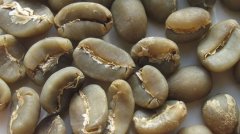
Taste characteristics of slightly sour Vietnamese coffee varieties introduction to the flavor of fine coffee beans in the manor
Vietnamese coffee has a strong flavor, light sour taste, smooth and moist taste, slightly bitter in mellow, full-bodied, refreshing and refreshing. The representative products are moossy Coffee, Central Plains Coffee (G7 coffee), Saigon Coffee (SAGOCAFE) and Highland Coffee. Vietnam's geographical location is very favorable for coffee cultivation. Southern Vietnam has a hot and humid tropical climate, which is suitable for growing ROBUSTA coffee.

Planting environment advantage of Hido Manor in San Juan, Honduras
The planting environment of Honduras San Juan Hido Manor is located in the north of Central America, facing the Caribbean Sea to the north, the Gulf of Fonseca in the Pacific Ocean to the south, Nicaragua and El Salvador to the east and south, and Guatemala to the west, mostly mountains and plateaus. It has a tropical climate, mild temperature and abundant rainfall, so it is an ideal place for coffee growth. Two kinds of quality produced in Honduras

Characteristics of Vietnamese coffee varieties with light sour taste introduction to the flavor of fine coffee beans in manor
Vietnamese coffee has a strong flavor, light sour taste, smooth and moist taste, slightly bitter in mellow, full-bodied, refreshing and refreshing. The representative products are moossy Coffee, Central Plains Coffee (G7 coffee), Saigon Coffee (SAGOCAFE) and Highland Coffee. Vietnam's geographical location is very favorable for coffee cultivation. Southern Vietnam has a hot and humid tropical climate, which is suitable for growing ROBUSTA coffee.

Boutique Coffee Origin Fine Coffee characteristics Fine Coffee
The Blue Mountain Moca Baxi Santos de Mantelin, Colombia, the Mara Romsda integrated coffee tree is a small shrub growing in the tropical highlands. Its fruit is red or yellow, and the seeds inside are what we call coffee beans. At present, coffee beans are grown in about 66 countries in the world, among which they can be classified as Arabica, Robusta and Liberica, of which Arabica is the largest.

Papua New Guinea Coffee Estate Flavor Taste Introduction Bird of Paradise Estate
Papua New Guinea is the second largest country in the South Pacific after Australia in terms of population and area. It consists of New Guinea in the north and Papua in the south. It borders Irian Jaya province in Indonesia to the west and Australia across the Torres Strait to the south. It belongs to the Melanesian Islands. Papua New Guinea covers an area of 462,840 square kilometers and has a complete coastline.

Taste characteristics of Highland Coffee selected by Honduras San Juan Theodore
Honduran coffee has a rich and mellow taste, taste is not astringent, not sour, mellow and aroma are very high, quite personality. Honduran coffee can lead to multiple levels of flavor depending on the degree of roasting. Moderate baking can maximize the sweetness of beans, while deep baking increases bitterness, but sweetness does not disappear. Generally speaking, medium baking tastes best

Introduction to El Salvador Himalayan Coffee Manor with mild sour, bitter and sweet taste
El Salvador's domestic topography is mainly mountainous, plateau, volcanic, known as the country of volcanoes, Santa Ana active volcano 2385 meters above sea level, the highest peak in the country; the northern part of the country is the Lompa Valley and the southern part is the narrow coastal plain. El Salvador has a tropical climate with an annual average temperature of 28 ℃. November-April is the dry season and May-October is the rainy season. The coastal and lowland climate is hot and humid, with mountains.

A brief introduction to the flavor, taste and aroma characteristics of Santo Domingo coffee beans with excellent acidity
Turning to the introduction of Dominican coffee, the most distinctive features are fresh and elegant, full of particles, excellent acidity and pleasant flavor (two colleagues agree with this). Coffee in Dominica varies slightly in taste according to the altitude of the region where it is grown, with sour but rich taste in the highlands, and less sour and smoother taste in the lowlands. And some Dominican villages

Is Nicaraguan coffee bean sour? damage to Nicaraguan coffee bean leaf rust
Professional coffee knowledge exchange more coffee bean information please follow the coffee workshop (Wechat official account cafe_style) front street-Nicaraguan coffee introduction Nicaragua is located in the central Central American region, the north boundary of Honduras, south of Costa Rica, east of the Caribbean Sea, west of the Pacific Ocean, with a total area of 130400 square kilometers. The highlands in the north-central part of Nicaragua and the coastal plains in the east

Introduction to the cultivation Flavor of Coffee beans
Types of coffee beans: blue mountain mocha, Santos, Brazil, Santos, Colombia, Mantlin, Guatemala, Romsda integrated coffee tree is a small shrub growing in the tropical highlands, its fruit is red or yellow, and the internal seeds are what we call coffee beans. At present, coffee beans are grown in about 66 countries in the world, and they can be classified as Arabica, Robusta and Liberica.